-
311, Laxmideep Building, Nirman Vihar, New Delhi, India


Understanding BSc Full Form, Admission, and Career Scope
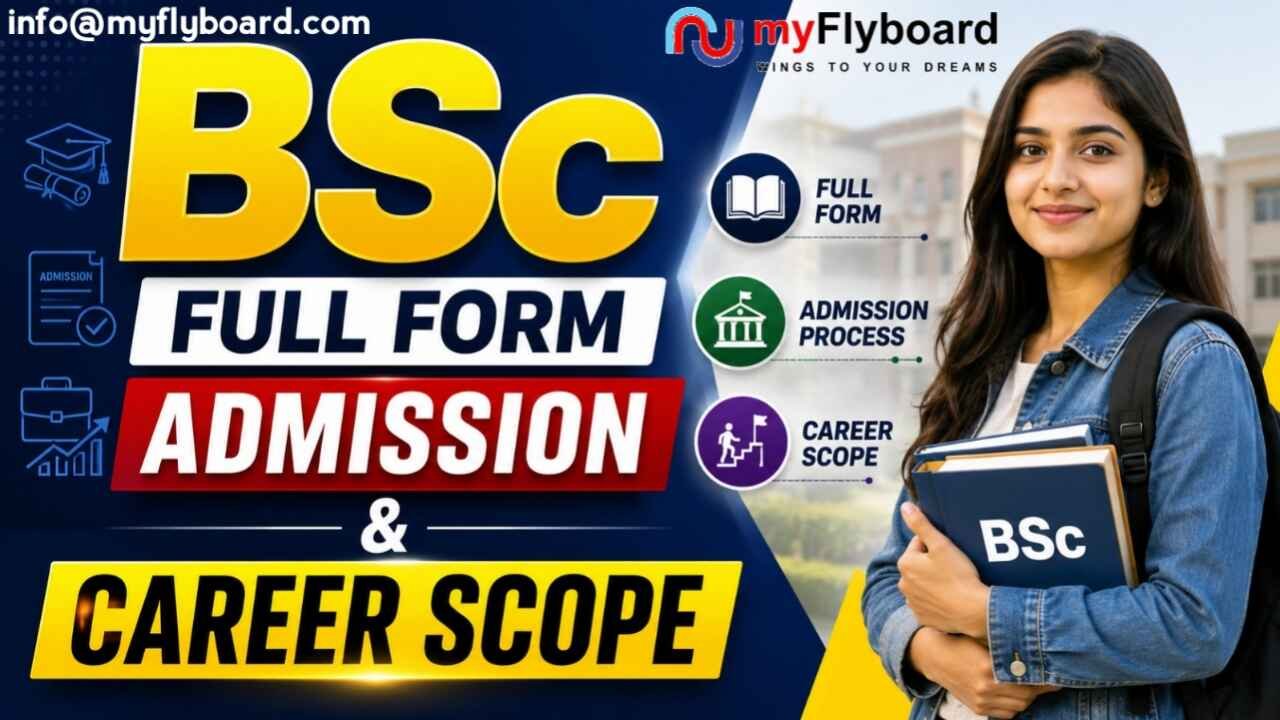
For those who have an interest in science and are willing to
pursue a future in science-based careers, BSc is a suitable decision. The BSc
or Bachelor of Science gives you an extensive understanding of all major
scientific concepts in different streams, including Physics, Chemistry,
Biology, Mathematics, Computer Science, etc. Understanding the BSc full form
helps students know that this course is not just about theory, but also
includes practical learning and lab work.
Firstly, BSc as a career option is good because it allows
you several options in choosing the right career path for you. After getting
your BSc degree, you may pursue your studies further with a master's degree,
such as MSc or MBA, or opt for competitive exams such as UPSC, SSC, or banking
or any other governmental services.
Types of BSc Courses
|
Type |
Meaning |
Focus |
|
BSc
General |
Basic
science degree |
Covers
multiple science subjects |
|
BSc
Honours |
Specialised
degree in one subject |
Deep
focus on one subject |
|
BSc
Professional |
Job-oriented
courses |
Practical
skills + industry focus (e.g., BSc IT, Nursing, Agriculture) |
Admission Process for BSc
|
Type
of Admission |
How
It Works |
Key
Details |
|
Merit-Based
Admission |
Based
on 12th marks |
Most
colleges select students directly based on their percentage in the Science
stream |
|
Entrance
Exam-Based |
Based
on exam score |
Some
universities conduct exams like CUET or state-level tests for selection |
Skills You Gain in a BSc Course
The BSc full form is Bachelor of Science, a degree that
students take after 12th if they want to study science in more detail. Apart
from providing knowledge in various science disciplines, a BSc program also
assists students in acquiring an array of practical and soft skills. These are
useful in various spheres of people's lives as well as their future studies and
employment.
Acquired skills in BSc:
1. Proficiency in the chosen field of study
2. Practical experience
3. Research mindset
4. Analytical abilities
5. Effective communication
6. Teamwork and collaboration
7. Discipline and time management
Eligibility Criteria for BSc
|
Criteria |
Details |
|
Educational
Qualification |
10+2
(Higher Secondary) pass from a recognized board |
|
Stream
Required |
Mostly
Science stream (PCM – Physics, Chemistry, Math or PCB – Physics, Chemistry,
Biology) |
|
Minimum
Marks |
Usually
45% to 60% (varies by college and university) |
|
Subject
Requirement |
Some
courses may require specific subjects like Math or Biology |
|
Age
Limit |
No
fixed age limit in most colleges |
|
Entrance
Exams |
Some
universities require CUET or state-level entrance exams |
|
Admission
Type |
Based
on merit (12th marks) or entrance exam score |
Difference Between BSc and Other Courses (BA / BCom / BTech)
All four degree programs, such as BSc, BA, BCom, and BTech,
are under the undergraduate degree program, although they vary because of the
area of study and skills gained from that program. BSc is mainly focused on
science, while BA is an arts discipline, BCom deals with commerce-related
courses, and BTech emphasizes technology and engineering studies.
|
Point |
BSc
(Bachelor of Science) |
BA
(Bachelor of Arts) |
BCom
(Bachelor of Commerce) |
BTech
(Bachelor of Technology) |
|
Focus
Area |
Science
subjects like Physics, Chemistry, Biology, and Math |
Arts,
humanities, languages, social studies |
Commerce,
finance, accounting, business |
Engineering,
technology, applied science |
|
Learning
Style |
Mix of
theory + practical + lab work |
Mostly
theory and conceptual learning |
Theory
with business and finance concepts |
Heavy
practical, technical, and project-based |
|
Career
Options |
Research,
lab work, IT, teaching, higher studies |
UPSC,
teaching, writing, media, social work |
Banking,
accounting, finance, corporate jobs |
Engineering
jobs, software, and technical industries |
|
Skill
Type |
Analytical
+ scientific thinking |
Communication
+ conceptual understanding |
Business
+ numerical skills |
Technical
+ problem-solving skills |
|
Further
Studies |
MSc,
research, professional courses |
MA,
UPSC preparation, specialized courses |
MCom,
MBA, finance courses |
MTech,
MBA, specialized engineering fields |
Is a BSc a Good Course After 12th?
Many students search for the BSc full form because it is one
of the most common graduation courses after 12th science. Yes, BSc is an
excellent choice as a course for students who have finished 12th standard
studies, particularly if science is your field of interest and you would like
to remain versatile in terms of career prospects. A BSc course is among the
most versatile courses in undergraduate studies that does not confine itself to
a certain set of jobs or domains.
Advantages of doing a BSc after class 12:
1. Suitable for further studies
2. Many career opportunities
3. Helps prepare for competitive exams
4. Development of skills
5. Cost-effective
Top Entrance Exams for BSc Admission
The following are the entrance exams for getting into BSc
programs in India. Different universities/colleges conduct entrance exams for
admission to undergraduate degree programs in the Science stream after class
12th.
|
Entrance
Exam |
Conducting
Body |
Courses
Covered |
Eligibility |
Purpose |
|
CUET
(Common University Entrance Test) |
NTA
(National Testing Agency) |
BSc and
other UG courses in central universities |
12th
pass with Science stream (varies by university) |
Admission
to central universities like DU, BHU, JNU, etc. |
|
IISER
Aptitude Test |
Indian
Institutes of Science Education and Research |
BS-MS
Dual Degree (Science programs) |
12th
with Science stream |
Admission
to IISER institutes for research-focused science courses |
|
NEST
(National Entrance Screening Test) |
NISER
& UM-DAE CEBS |
Integrated
MSc programs in science |
12th
with Science stream |
Admission
to top research institutes |
|
ICAR
AIEEA |
Indian
Council of Agricultural Research |
BSc
Agriculture and related courses |
12th
with PCB/PCM |
Admission
to agricultural universities in India |
|
AIIMS
BSc Nursing Entrance (now via INI-CET/Institute exam) |
AIIMS /
Other Institutes |
BSc
Nursing and allied health courses |
12th
with Biology |
Admission
to nursing and medical-related BSc courses |
|
State
University Entrance Exams |
Various
State Universities |
BSc
courses in state colleges |
12th
pass with Science stream |
Admission
to state-level colleges and universities |
BSc Courses Online / Via Distance
The online and distance BSc courses are made available for
people who find it difficult to go to college because of some reasons, such as
work commitments or location issues.
|
Point |
Details |
|
Mode of
Study |
Online
classes / recorded lectures/study material |
|
Duration |
Usually
3 years (same as regular BSc) |
|
Eligibility |
12th
pass with Science stream (varies by university) |
|
Top
Universities |
IGNOU,
Amity Online, Symbiosis Centre for Distance Learning, Lovely Professional
University (Online) |
|
Learning
Style |
Flexible
learning with exams conducted online or at exam centers |
|
Best
For |
Working
students, remote learners, or those needing flexible timing |
|
Career
Value |
Valid
degree for jobs, government exams, and higher studies (if UGC-approved) |
Admission for BSc through CUET / State Entrance Test
Most of the renowned colleges in India have admission
criteria for BSc through exams such as CUET or state level tests. This is used
for determining merit-based admissions.
|
Point |
Details |
|
CUET
Full Form |
Common
University Entrance Test |
|
Conducting
Body |
National
Testing Agency (NTA) |
|
Purpose |
Admission
to central universities like DU, BHU, JNU, etc. |
|
Eligibility |
12th
pass with Science stream (subject requirements vary) |
|
State
Exams |
Conducted
by individual states for state universities and colleges |
|
Mode of
Exam |
Computer-based
test |
|
Subjects
Tested |
Physics,
Chemistry, Maths/Biology + language + general test (varies) |
|
Benefits |
Fair
selection process and access to top government colleges |
Future Scope after BSc (2026 update)
After pursuing a BSc program, there are multiple career
paths for the students to explore in 2026. The BSc program is a versatile
course as it helps pursue further education or even join the job market.
|
Career
Path |
Options
After BSc |
Key
Details |
|
Higher
Education |
MSc,
MBA, MCA, Data Science, AI, Cyber Security, Biotechnology |
Most
common path for specialization and better job roles |
|
Government
Jobs |
UPSC,
SSC, Banking, Railways, Defence, PSUs |
Based
on competitive exams; stable career options |
|
Private
Sector Jobs |
IT
support, Lab technician, Healthcare, Quality control, Research assistant |
Entry-level
jobs; grows with experience and skills |
|
Research
& Teaching |
PhD,
Research scientist, Lecturer, School teacher (with B.Ed.) |
Best
for students interested in academics and science |
|
Future-Tech
Careers |
Artificial
Intelligence, Data Science, Digital Marketing, Tech roles |
High
demand fields in 2026 with skill-based growth |

Latest Post


-
Email Address:
info@myflyboard.com
-
Phone Number
+91 9818024841
-
Our Address
311, Laxmideep Building,
Nirman Vihar, New Delhi, India